Polymeric vs. Porcelain Insulators: High Voltage Comparison

Polymeric vs. Porcelain Insulators: High Voltage Comparison for Modern Power Grids
Introduction
Electrical insulators are critical assets in high-voltage transmission lines, distribution networks, and substation infrastructure. They ensure electrical isolation while supporting conductors under heavy mechanical tension, wind loading, and environmental stress.
For decades, traditional ceramic and porcelain insulators were the industry standard across high-voltage transmission networks. However, modern electrical grids are rapidly transitioning to Polymeric (Composite) Insulators. This detailed guide compares polymeric vs porcelain insulators to help electrical engineers, EPC contractors, and procurement managers choose the right insulation system.
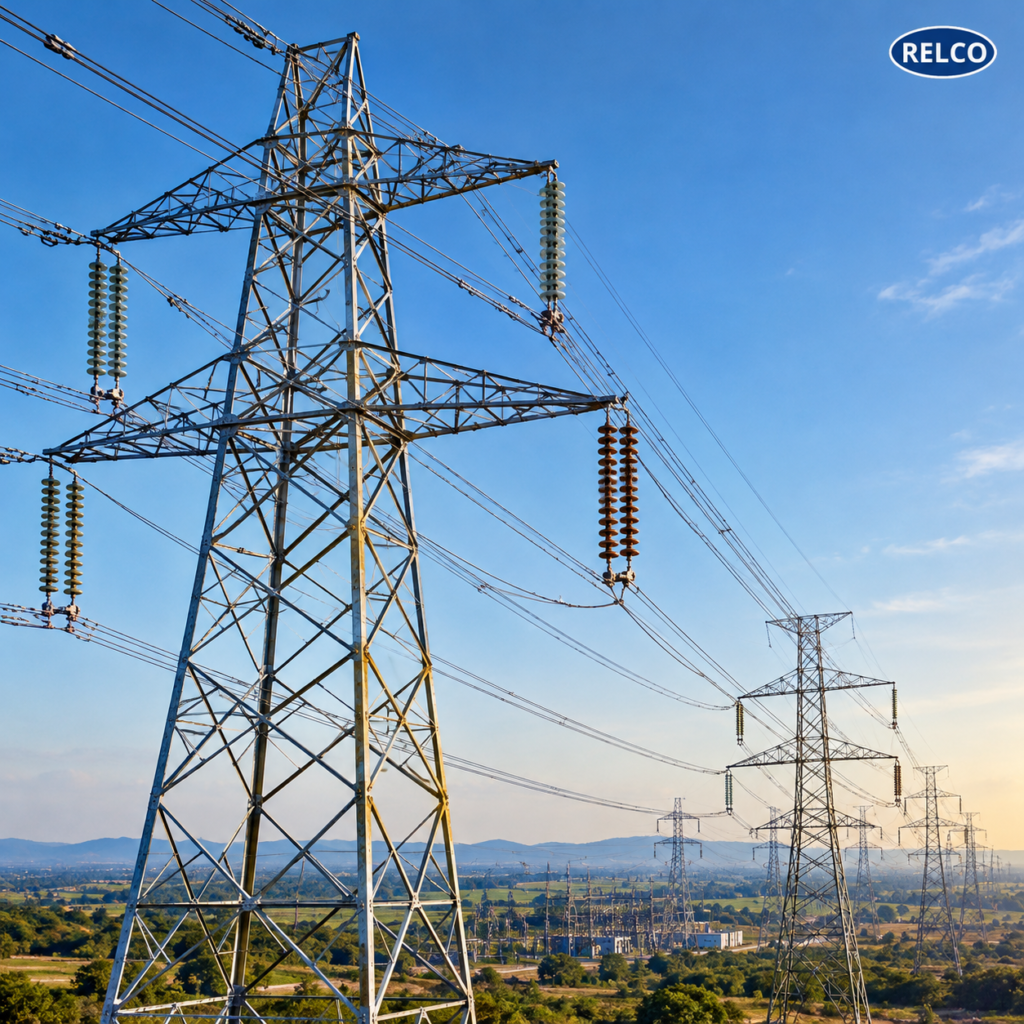
Overview of Insulator Types
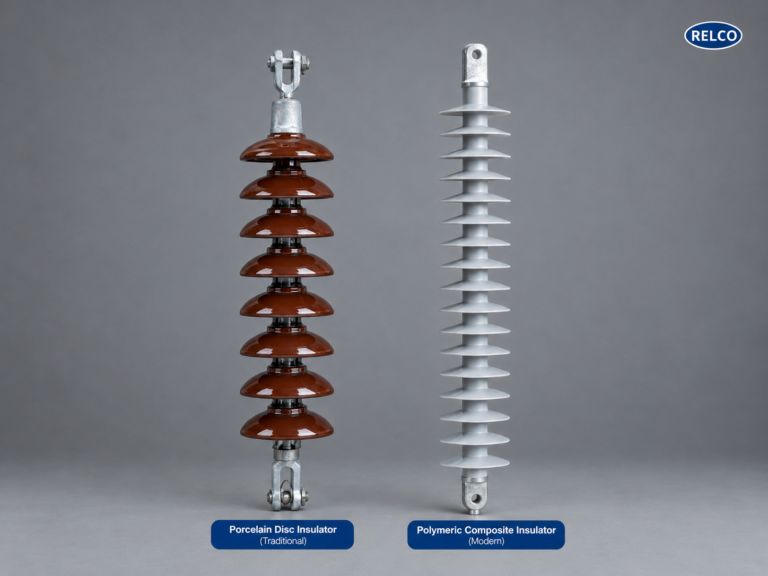
What Are Porcelain Insulators?
Porcelain (ceramic) insulators are produced by firing refined clay, kaolin, alumina, and quartz at extremely high temperatures.
- High Mechanical Compression Strength: Excellent load-bearing capabilities for heavy-duty transmission line towers and substations.
- UV & Chemical Resistance: Inert ceramic surfaces do not degrade under severe ultraviolet exposure or ambient atmospheric weathering.
- Proven Track Record: Over a century of operational history across global power grids.
- Limitations: Heavy physical weight, brittle nature susceptible to impact damage or vandalism, and a hydrophilic surface that attracts moisture and surface pollution.
What Are Polymeric (Composite) Insulators?
Polymeric insulators are engineered composite structures designed for high-voltage power lines and distribution systems. They consist of two core components:
- Fiberglass Reinforced Polymer (FRP) Core: A high-strength rod that handles high axial tensile loads.
- Silicone Rubber / EPDM Housing: Weather-resistant sheds molded over the core to provide creepage distance and weather protection.
Key Technical Comparisons
Weight, Transportation, and Installation
- Polymeric Advantage: Silicone rubber composite insulators are 70% to 90% lighter than equivalent porcelain insulator strings.
- Logistics & Labor: Their lightweight design significantly reduces freight overhead, enables simpler handling on site, and cuts installation time and rigging equipment requirements for transmission line construction.
Pollution Performance & Hydrophobicity
- Hydrophobic Surface Properties: Silicone rubber sheds naturally repel water. In humid, coastal, or industrial areas, water forms isolated droplets rather than a continuous conductive sheet.
- Hydrophobicity Transfer: Low-molecular-weight (LMW) silicone chains migrate through surface dirt and contaminant layers, preserving water-repellent properties even under heavy airborne pollution.
- Pollution Flashover Resistance: Suppresses leakage currents and prevents dry-band arcing, drastically reducing the need for live-line washing compared to hydrophilic porcelain units.
Vandalism & Mechanical Resilience
- Porcelain Vulnerability: Brittle ceramic shatters under gunshot impacts, stone-throwing, or shipping vibrations, exposing the conductor to mechanical failure.
- Polymeric Resilience: Composite insulators absorb mechanical shock and resist vandalism without fracturing or compromising structural integrity.
Tracking, Erosion & Long-Term Durability
- Porcelain: Completely track-resistant and immune to UV aging, offering long operational lifespans.
- Polymeric Solutions: While early polymers faced UV chalking and surface tracking, modern High-Temperature Vulcanized (HTV) silicone rubber resists UV degradation, electrical tracking, and surface erosion, delivering 30+ years of dependable service.
Key Technical Comparisons
Weight, Transportation, and Installation
- Polymeric Advantage: Silicone rubber composite insulators are 70% to 90% lighter than equivalent porcelain insulator strings.
- Logistics & Labor: Their lightweight design significantly reduces freight overhead, enables simpler handling on site, and cuts installation time and rigging equipment requirements for transmission line construction.
Pollution Performance & Hydrophobicity
- Hydrophobic Surface Properties: Silicone rubber sheds naturally repel water. In humid, coastal, or industrial areas, water forms isolated droplets rather than a continuous conductive sheet.
- Hydrophobicity Transfer: Low-molecular-weight (LMW) silicone chains migrate through surface dirt and contaminant layers, preserving water-repellent properties even under heavy airborne pollution.
- Pollution Flashover Resistance: Suppresses leakage currents and prevents dry-band arcing, drastically reducing the need for live-line washing compared to hydrophilic porcelain units.
Vandalism & Mechanical Resilience
- Porcelain Vulnerability: Brittle ceramic shatters under gunshot impacts, stone-throwing, or shipping vibrations, exposing the conductor to mechanical failure.
- Polymeric Resilience: Composite insulators absorb mechanical shock and resist vandalism without fracturing or compromising structural integrity.
Tracking, Erosion & Long-Term Durability
- Porcelain: Completely track-resistant and immune to UV aging, offering long operational lifespans.
- Polymeric Solutions: While early polymers faced UV chalking and surface tracking, modern High-Temperature Vulcanized (HTV) silicone rubber resists UV degradation, electrical tracking, and surface erosion, delivering 30+ years of dependable service.
Technical Comparison Matrix
| Technical Parameter | Porcelain Insulators | Polymeric (Composite) Insulators |
|---|---|---|
| Material Composition | Fired ceramic clay / alumina | FRP rod core with silicone rubber sheds |
| Weight Comparison | Heavy (increases transport & handling costs) | Ultra-lightweight (up to 90% lighter) |
| Surface Property | Hydrophilic (attracts moisture) | Hydrophobic (repels water) |
| Pollution Performance | Prone to leakage currents; needs washing | Superior flashover resistance; self-cleaning |
| Vandalism Resistance | Low (shatters on impact) | High (shatterproof and resilient) |
| Maintenance Needs | Regular washing in high-pollution zones | Virtually maintenance-free |
Conclusion & Selection Criteria
Both insulator types have clear applications in modern power grids:
- Choose Porcelain Insulators for legacy substations requiring extreme mechanical compression strength and where UV exposure is extreme but atmospheric pollution is low.
- Choose Polymeric (Composite) Insulators for long-distance high-voltage transmission lines, high-pollution or coastal corridors, remote installations with difficult logistics, and locations prone to vandalism.
About the Author:
Meghna Baid is a marketing professional with 7 years of experience, specializing in the electrical industry. She excels in brand building, strategic messaging, and high-impact campaigns, blending creativity with data-driven precision. With a sharp understanding of B2B and technical markets, she crafts compelling narratives that drive results and build strong industry connections.
Reach out to her at marketing@relcoelectrical.com

About Us
RELCO Electricals excels in engineering resilience for global power infrastructure, providing the technical precision and high-voltage safety solutions required to safeguard critical energy networks throughout their entire operational lifecycle.
Quick Link
Contact Us
- +91-8447317403, 9999904753
- media@relcoelectrical.com
- Ground Floor, Industrial Park, Block C, Plot No. 548, Narela, New Delhi, Delhi 110040
Relco Electricals
Typically replies within minutes
Hi from Relco Electricals!
Supporting India’s power grid since 1995. Looking for a custom quote for portable earthing devices or live-line equipment? Tell us your project requirements below.
WhatsApp Us
Online | Privacy policy
WhatsApp us