

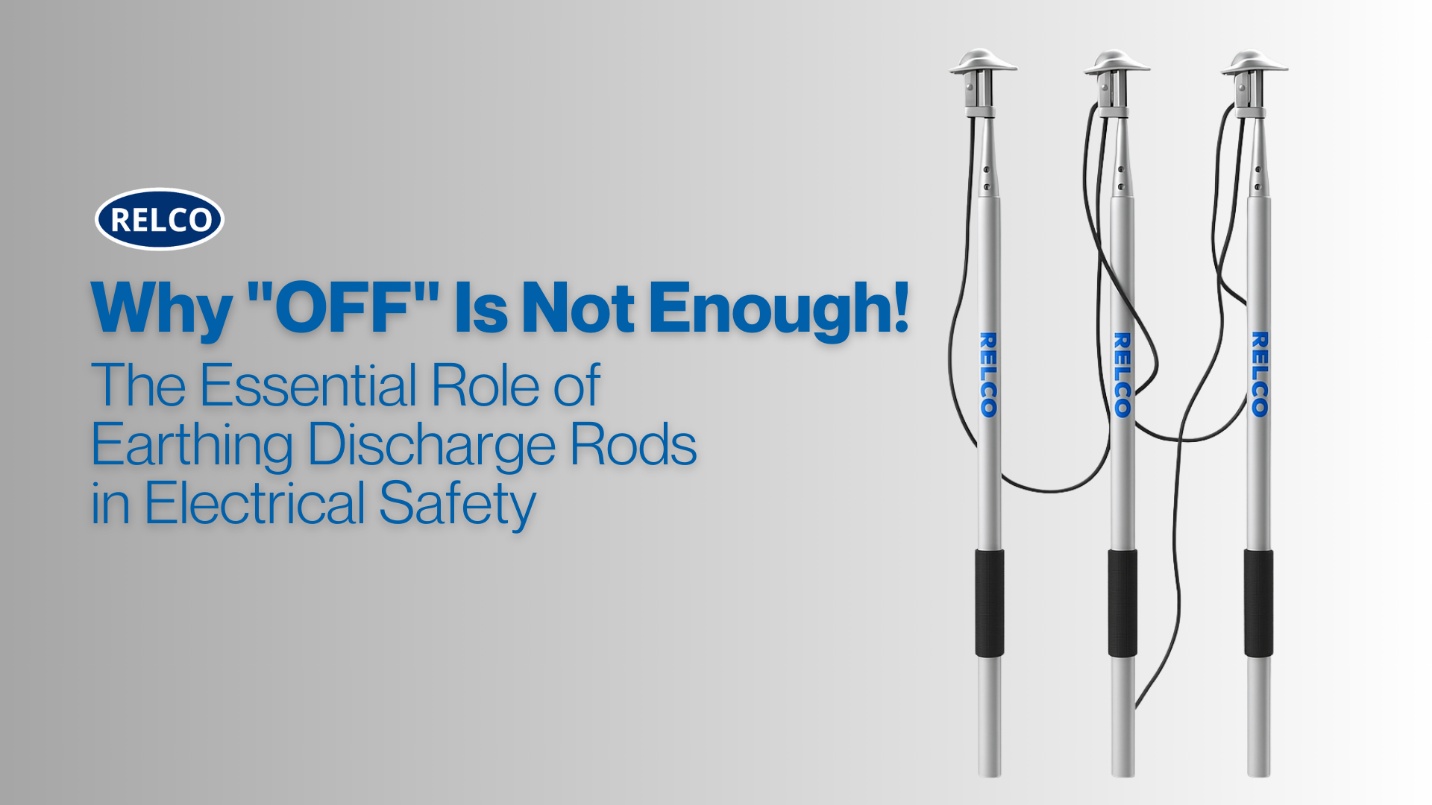
In the high-voltage industry, the phrase “de-energized” can be deceptively simple. While turning off a breaker is the first step in any maintenance protocol, seasoned electrical professionals know that “off” does not always mean “safe.”
To truly protect lives, we must look at the Earthing Discharge Rod—also technically known as Portable Equipment for Earthing and Short-Circuiting—as our most critical line of defense.
The “Safety Net” Philosophy: Your Key Safety Layer
The first and most important principle to understand is that Discharge Rods are designed to be a second layer of safety.
In a perfect world, primary care (isolating and de-energizing the system) would be enough. However, when primary protocols fail due to human error or mechanical malfunction, the Discharge Rod becomes the final, life-saving barrier.
Understanding the Invisible Risks
Working on an isolated electrical system without proper earthing is essentially working on a “loaded gun.” Even if the main switch is off, four major risks remain:
-
- Accidental Re-energization: Installations are frequently switched back on due to confusion, miscommunication, simple accidents, or even negligence.
-
- Induced Voltage: If your “dead” line runs near an energized adjacent installation, energy can “leak” through the air, creating dangerous voltages and arcs.
-
- Residual Current: Electrical systems can act like batteries, holding a residual current even after the main power is switched off or disconnected.
-
- Back-Feed (Back Current): Energy can inadvertently flow backward into your work site from secondary sources—like emergency generators, solar inverters, or uninterruptible power supplies (UPS)—that haven’t been properly isolated.
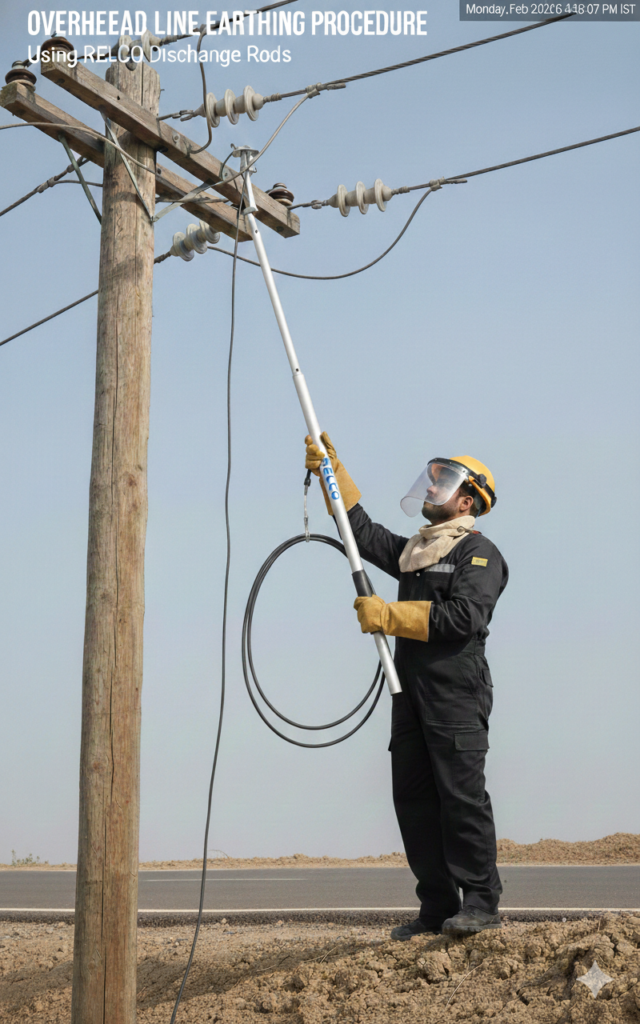
Representative Image: A man holding discharge rod which he will connect to the conductor to create a safe line where he will start working.
The Goal: Achieving an Equipotential Safe Zone
The ultimate purpose of using a Discharge Rod is to achieve equipotential conditions.
In simple terms, “equipotential” means making the electrical pressure the same across the entire workspace. By short-circuiting the system and connecting it to the earth, the rod ensures that every surface a worker touches is at the exact same potential (zero volts). If the system is accidentally re-energized, the current is immediately diverted into the ground, preventing it from passing through the worker’s body.
Best Practices for Selection and Use
Using just any rod isn’t enough. To effectively manage dangerous voltage and arcing, your earthing equipment must be:
-
- Correctly Sized: Rated to handle the specific fault current of your system.
-
- Field-Specific: Selected precisely for its intended application.
-
- Strictly Guided: Connected according to the manufacturer’s instructions.
-
- Well-Maintained: Kept in top condition to ensure a low-resistance path to the ground.
At RELCO, we pride ourselves on providing telescopic discharge rods and earthing solutions that meet these rigorous industry standards. We don’t just sell tools; we provide the second layer of safety that ensures every worker returns home. We can consult you to help you use the most effective design according to your specific needs.
Secure Your Work Site Today
Visit us at www.relcoelectricals.com to view our full range of safety equipment.
For expert consultations or quotes, contact us:
- Email: marketing@relcoelectrical.com | sales@relcoelectrical.com
- WhatsApp/Call: +91-8447317403 | +91-9999904753
Buy now: https://relcoelectricals.com/product/relco-discharge-rod/
Safety FAQ: Everything You Need to Know About Earthing Discharge Rods
Q1: What is the primary purpose of an Earthing Discharge Rod?
A: An Earthing Discharge Rod, also known as portable equipment for earthing and short-circuiting, serves as a vital second layer of safety for electrical workers. Its primary role is to minimize dangerous voltages and electrical arcs if a de-energized installation is accidentally switched back on or if energy is induced from nearby live lines.
Q2: Why isn’t simply isolating the power enough for safety?
A: While isolating the system is the first step, it is not foolproof. Risks remain, such as residual current staying on the lines even after the power is cut, or induced voltage from energized adjacent installations that are still present. In some cases, “back-feed” current from secondary sources can also re-energize the site. The discharge rod is the key safety layer that handles these failures.
Q3: What are “Equipotential Conditions,” and why are they important?
A: Equipotential conditions are achieved when all conductive parts in a workspace are connected to the same electrical potential (ideally zero). This is the core purpose of a discharge rod: to ensure that even in the event of accidental re-energization, there is no voltage difference that could cause current to flow through a worker’s body, thus avoiding injury.
Q4: What causes a “dead” line to become dangerous again?
A: There are four primary technical risks:
-
- Accidental Switching: The power is turned back on due to confusion, negligence, or miscommunication.
-
- Induced Energy: Nearby live high-voltage lines “leak” energy into the de-energized workspace.
-
- Residual Charge: The system holds onto electrical energy like a battery after disconnection.
-
- Back Current: Electricity flows backward into the system from unexpected sources like backup generators or solar inverters.
Q5: How should I select and maintain my Earthing and Short-Circuiting equipment?
A: To ensure maximum protection, equipment must be:
-
- Correctly Sized: Rated for the specific fault current of your application.
-
- Properly Selected: Chosen based on guidelines from studies and tests for your specific field.
-
- Strictly Used: Connected exactly according to the provided instructions.
- Well-Maintained: Kept in good condition to ensure a low-resistance path to the ground.
The Ultimate “Second Layer” of Electrical Safety
When working on high-voltage installations, “off” isn’t always safe. The RELCO Telescopic Earthing Discharge Rod (Portable Equipment for Earthing and Short-Circuiting) provides the critical second layer of protection your team needs when primary isolation protocols fail.
Designed to meet rigorous safety standards, this rod ensures that even in the most unpredictable environments, your workers remain in a “zero-voltage” safe zone.
Why This Tool is Essential for Your Team:
-
- Shield Against Human Error: Protects workers if the system is accidentally switched on again due to confusion, negligence, or miscommunication.
-
- Induced Voltage Drainage: Constantly removes dangerous voltages and prevents arcs caused by energy “leaking” from nearby energized installations.
-
- Residual Charge Removal: Safely bleeds off residual currents that may remain on the lines even after the main power is disconnected.
-
- Back-Feed Protection: Provides a safe path to ground for “back current” originating from secondary sources like improperly isolated generators or solar inverters.
-
- Equipotential Safety: Connects de-energized parts to the ground to achieve equipotential conditions, ensuring no dangerous voltage difference exists between the worker and the equipment.
Engineered for Reliability
To ensure maximum performance during a fault, our rods are:
-
- Standard Compliant: Built in accordance with guidelines prepared through proper studies and tests.
- Precision Sized: Available in various ratings to match the specific fault currents of your application.
- Durably Constructed: Designed to be kept in good condition for long-term field reliability.
