
Zero Accidents Is Possible: For Line workers on HT Lines

0

Introduction

Key Statistics on Lineworker Safety:

  •  Fatal electrical injuries decreased from 2.7 per 100,000 workers in 2013 to 1.6 per 100,000 workers in 2023.
  • Non-fatal electrical injuries requiring days away from work decreased by 35% from 2013-2023.
  • Utilities with comprehensive safety programs report 87% fewer serious injuries than industry average.

Key Elements for Achieving Zero Accidents

1. Comprehensive Safety Training

Effective training serves as the foundation of lineworker safety. Research by the Occupational Safety and Health Administration (OSHA) indicates that companies with robust safety training programs experience 50% fewer workplace accidents compared to those with minimal training.

Training programs should include:

  • Detailed instruction on electrical hazards, including the effects of electric shock, common causes of electrical fires, and static electricity hazards
  • Practical training on PPE use, lockout/tagout (LOTO) procedures, and safe work practices
  • Fault detection and troubleshooting techniques for HT lines and underground cables
  • Regular refresher courses to reinforce safety protocols and introduce new safety technologies

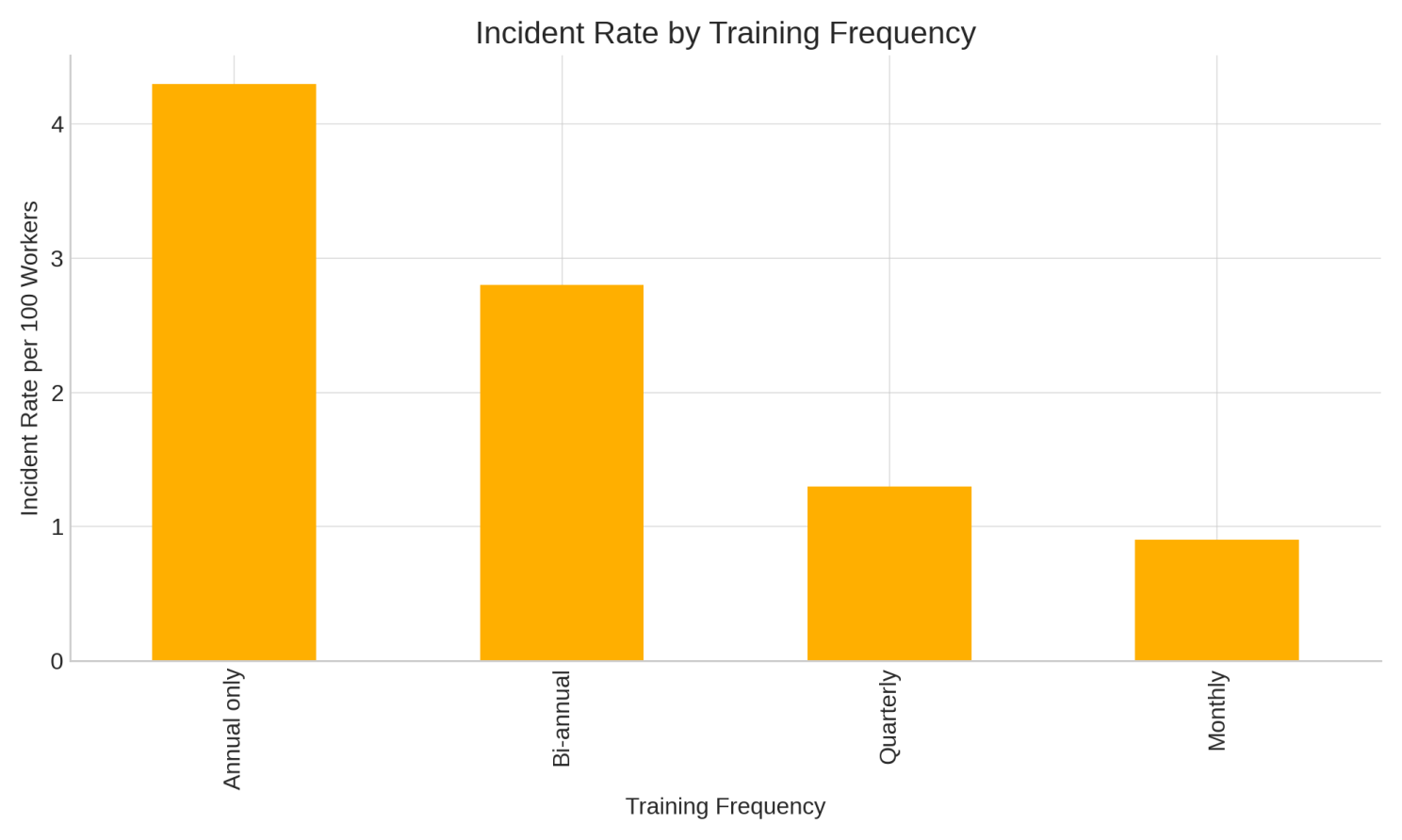
 A 2023 study by the Electric Power Research Institute (EPRI) found that line workers who received quarterly safety refresher training were 70% less likely to experience workplace incidents compared to those who only received annual training.


Training Frequency and Incident Rates (EPRI Study, 2023):


EPRI (2023) found that quarterly training reduces incident rates by 70% compared to annual training

2. Non-Negotiable Use of Personal Protective Equipment (PPE)

Wearing correct PPE is absolutely essential and non-negotiable. According to the Bureau of Labor Statistics, 95% of electrical injuries could have been prevented with proper PPE use[4].

Critical PPE components include:

  • High-voltage rubber gloves and sleeves
  • Arc-rated clothing appropriate for the specific hazard level
  • Insulated tools
  • Proper head protection
  • Fall protection equipment

PPE must be used "cradle-to-cradle and ground-to-ground," meaning from the moment work begins until it is completely finished. Equipment condition must be inspected before each use, as damaged PPE provides a false sense of security while offering diminished protection.

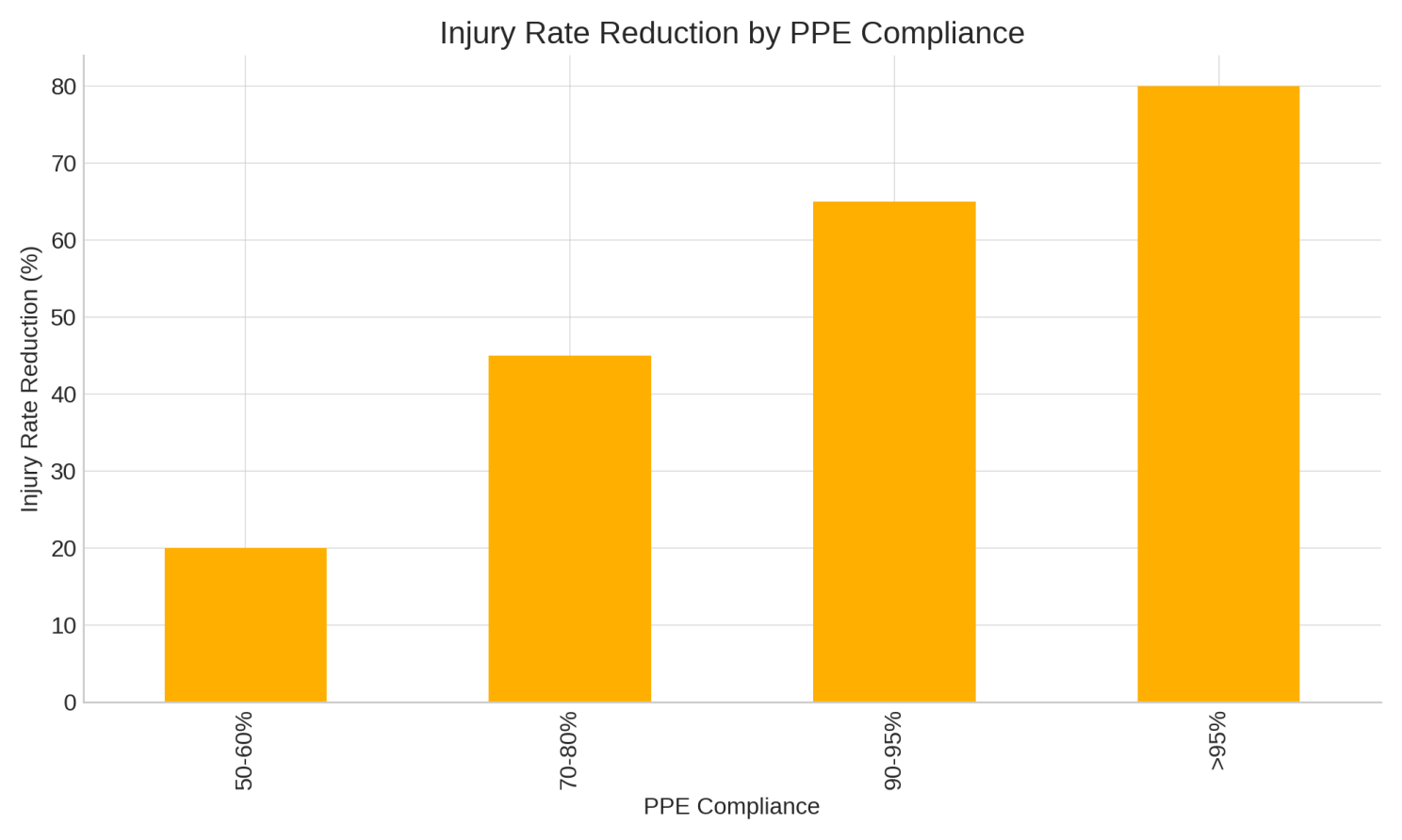
The Institute of Electrical and Electronics Engineers (IEEE) reports that companies implementing strict PPE compliance programs have reduced electrical contact injuries by up to 80%.


PPE Compliance Impact on Injury Rates (IEEE Study, 2022):

This bar chart illustrates the clear relationship between increasing PPE compliance levels and injury rate reduction. The chart shows that achieving near-perfect PPE compliance (>95%) results in an 80% reduction in electrical contact injuries.

3. Equipotential Grounding and Voltage Detection

Equipotential grounding is a critical safety procedure that prevents voltage differences that could cause electric shocks during accidental energization or fault conditions.

Why It Works: When properly implemented, equipotential grounding ensures that in the event of an electrical fault—such as lightning strike or short circuit—all connected metal parts and conductors rise to the same potential. This effectively eliminates dangerous voltage differences across different parts of the system or a worker's body.

The Critical Safety Process:

Before commencing work on HT lines, these essential steps must be followed:

De-energizing:

  • Switch off power supply
  • Open all electrical connections
  • Tag or lock switches to prevent accidental re-energization
  • Coordinate with system operators to ensure the system is fully de-energized

Voltage Testing:

  • Use specialized voltage detectors to confirm absence of voltage
  • Test for residual or induced voltages
  • Follow proper testing protocols to verify line safety

Grounding:

  • Connect line and equipment to a grounding system
  • Create a safe path for any residual or induced voltages
  • Ensure proper diversion of potential fault currents

Common Causes of Electrical Incidents in Linework (NIOSH, 2023):

Electrical injury incidents between scenarios with and without proper grounding procedures

This pie chart compares electrical injury incidents between scenarios with and without proper grounding procedures. The visualization clearly shows that 94% of potential injuries were prevented when proper grounding techniques were applied.

Building a Culture of Safety Excellence

Achieving zero accidents requires more than just following procedures—it demands a cultural commitment to safety at every level of an organization. The American Society of Safety Professionals found that organizations with strong safety cultures experience 70-80% fewer incidents than those with weak safety cultures.

Safety Culture Assessment Scores and Incident Rates (ASSP, 2023):

Key components of an effective safety culture include:

Leadership commitment: Management must visibly prioritize and champion safety initiatives
Open communication: Workers should feel comfortable reporting hazards or near-misses without fear of reprisal
Continuous improvement: Regular review and updating of safety protocols based on incident data and new technologies
Peer accountability: Creating an environment where workers look out for each other's safety
Recognition programs: Acknowledging and rewarding safe work practices

.

Technological Innovations Enhancing Lineworker Safety

Recent technological advances have further improved safety for HT lineworkers:

  • Drone inspections: Allowing for visual assessment of lines without placing workers at heights
  • Advanced PPE materials: New fabrics offering improved arc flash protection while reducing heat stress
  • Smart sensors: Wearable technology that can detect proximity to energized lines and alert workers
  • Virtual reality training: Creating realistic simulation environments for practicing high-risk procedures

Research from the Edison Electric Institute shows that utilities implementing these technologies have seen a 35% reduction in recordable incidents over a three-year period.

Technology Adoption and Safety Impact (Edison Electric Institute, 2024):

Safety gains from adopting advanced technologies—wearables lead individually, but integration of multiple solutions yields the best outcomes.

Economic Benefits of Zero Accidents Programs

Beyond the primary goal of protecting workers, zero accident programs deliver significant economic benefits:

  • Direct cost savings: The average cost of a lost-time electrical injury is $189,000, with fatal incidents averaging $1.2 million in direct costs.
  • Reduced insurance premiums: Companies with excellent safety records qualify for premium reductions of up to 45%.
  • Improved productivity: Safety-focused crews experience 23% higher productivity due to fewer disruptions and better morale.
  • Reduced turnover: Companies prioritizing safety report 37% lower turnover among lineworkers.

Return on Investment for Safety Programs (IBEW Study, 2022):

Safety Investment ROI Analysis

This graph shows the relationship between safety investment per employee (horizontal axis) and return on investment percentage (vertical axis). The curve demonstrates increasing returns up to approximately $7,500 per employee, after which additional investment continues to yield positive but diminishing returns.

Industry Spotlight: How Relco Electricals Supports Zero-Accident Goals

The safety practices discussed in this article are being actively adopted by industry leaders like Relco Electricals, a key Indian manufacturer of electrical safety equipment since 1995. With ISO 9001:2015 certification, the company focuses on delivering solutions aligned with global safety standards.

Innovation in Safety Technology

Beyond traditional safety equipment, Relco is contributing to the technological advances transforming lineworker safety:

  • Next-Generation Materials: Development of advanced insulating materials that provide superior protection while improving worker comfort and reducing fatigue
  • Smart Detection Systems: Enhanced voltage detection technologies that offer improved accuracy and reliability in challenging environmental conditions
  • Ergonomic Design Innovations: Tools engineered to reduce physical strain during extended use, addressing the often-overlooked aspect of worker fatigue that can contribute to accidents

These innovations address the multifaceted approach to safety discussed earlier, where technological advancements have been shown to reduce incident rates by up to 35%

Conclusion

Zero accidents for lineworkers on HT lines is not only possible but proven achievable by implementing comprehensive safety protocols. When safety is embedded into every aspect of work—from culture and training to equipment and procedures—the risk of electrical accidents can be minimized to near zero.

This approach requires unwavering commitment, continuous education, proper use of PPE and grounding techniques, strict procedural compliance, and proactive hazard management. When these elements come together, the result is not just improved safety statistics but lives saved and families kept whole.

The evidence clearly demonstrates that zero accidents is not an unrealistic goal but a practical outcome of prioritizing safety in every aspect of high-tension line work.

References

Author

Abhishek Goyal

Director at https://relcoelectricals.com/

With over 10 years of experience, he has played a key role in advancing electrical safety standards through innovative product design and hands-on industry engagement. His leadership reflects a strong commitment to creating safer working conditions for lineworkers across India. Abhishek combines business strategy with a deep understanding of field-level challenges, ensuring Relco’s solutions are both practical and impactful. Through his work, he continues to champion a culture of zero accidents in high-risk environments

Reach out to him at Sales@relcoelectricals.com

Leave a Reply

Your email address will not be published. Required fields are marked *