Complete Guide to Corona Discharge in High-Voltage Power Transmission Lines

Complete Guide to Corona Discharge in High-Voltage Power Transmission Lines
In the realm of high-voltage power transmission and distribution infrastructure, efficiency, safety, and reliability are paramount. Utilities, transmission line contractors, and electrical power engineers constantly work to minimize energy wastage and equipment degradation. Among the various complex physical phenomena that impact overhead power lines and substation equipment, corona discharge remains one of the most critical and heavily discussed challenges in power systems engineering.
Whether you are an electrical engineering professional designing high-voltage substations, a utility procurement manager, or a student studying power transmission, mastering the mechanics of corona loss is essential. This comprehensive guide explores what corona discharge is, why it occurs, its direct impacts on power grid efficiency, and the modern engineering solutions deployed to mitigate it.
What is Corona Discharge in Power Systems?
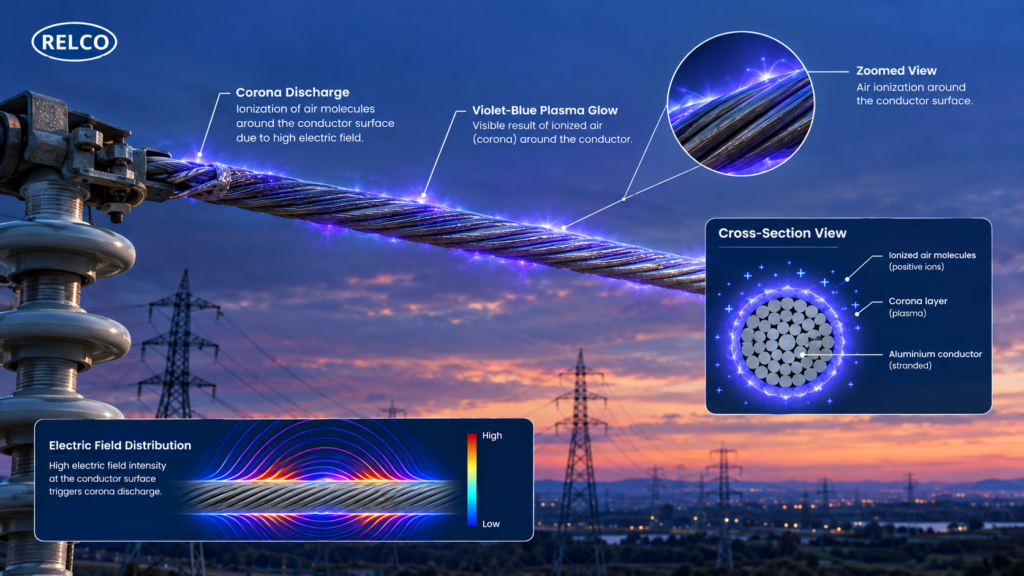
Corona discharge is a luminous, localized, and often audible electrical discharge that occurs when the electric field intensity surrounding a high-voltage conductor exceeds the dielectric breakdown strength of the surrounding air (typically around 30 kV/cm under standard temperature and pressure conditions).
When the local electric field gradient becomes too intense, air molecules close to the conductor surface undergo ionization. Electrons are stripped from air molecules, creating a faint violet-blue glow or plasma aura around the wire, accompanied by a distinct hissing or crackling sound and the generation of ozone.
Unlike a complete dielectric breakdown or a short circuit (flashover), a corona is a partial discharge. It does not bridge the entire insulation gap between conductors or towers, but it results in a continuous drain of electrical energy and gradual degradation of power transmission equipment over time.
Why Does Corona Discharge Occur?
The fundamental trigger for corona discharge is the non-uniform electric field surrounding high-voltage conductors. Several environmental, physical, and electrical parameters directly influence its formation:
- Operating Voltage & Surface Gradient: Higher transmission voltages inherently generate stronger electric fields. When the gradient surpasses air's breakdown limit, ionization initiates.
- Conductor Surface Condition: Surface irregularities, roughness, stranded wire gaps, dust, or scratches act as focal points that concentrate electric field stress.
- Weather and Atmospheric Conditions: Humidity, rain, snow, fog, and high altitude reduce air density and dielectric strength, making corona occurrence much more frequent.
- Conductor Spacing and Diameter: Smaller diameter conductors experience higher surface electric field intensities, lowering the critical disruptive voltage required for corona inception.
Major Impacts of Corona Loss on Power Transmission
Allowing corona discharge to persist unchecked introduces several critical operational and financial complications for utilities and power networks:
- Power Loss & Reduced Efficiency: Energy consumed during ionization converts into heat, sound, and light, directly contributing to power loss and lowering overall transmission efficiency.
- Electromagnetic Interference (EMI): High-frequency radio and television interference caused by corona pulses disrupts communication and signaling systems near transmission corridors.
- Chemical Degradation & Ozone Production: The reaction creates ozone and nitric acid, which chemically corrode metallic conductors, hardware fittings, and insulator strings over time.
- Acoustic Noise: A persistent humming or cracking noise becomes problematic, particularly for high-voltage lines passing near residential zones.
Engineering Solutions to Mitigate Corona Loss
Power transmission design engineers utilize advanced techniques to suppress electric field concentration and minimize corona effects:
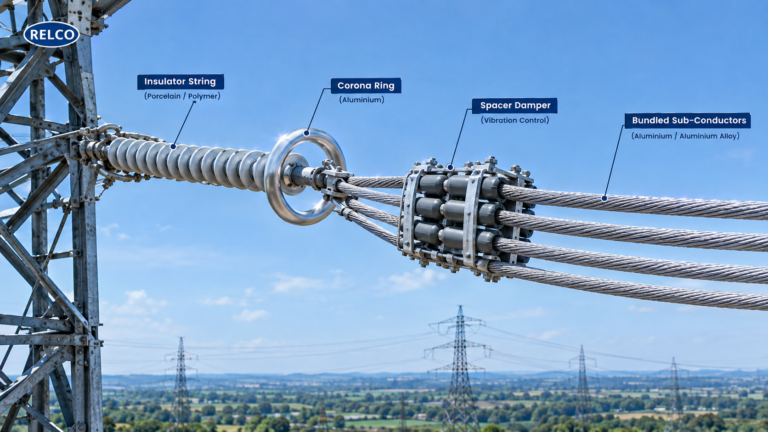
- Use of Bundled Conductors: Utilizing multiple conductors per phase increases the effective surface area, lowering the surface electric field gradient.
- Increasing Conductor Diameter: Larger diameter lines distribute voltage stress across a broader area, preventing local dielectric breakdown.
- Corona Rings and Shielding: Installing metallic corona rings at insulator strings smooths out electric field distributions at high-stress junctions.
Conclusion
Corona discharge is an inevitable physical phenomenon in high-voltage engineering, but with proper conductor selection, advanced hardware configuration, and rigorous network maintenance, its adverse effects can be tightly controlled. Ensuring grid stability and minimizing power loss remain vital goals for modern power transmission infrastructure.
About the Author:
Meghna Baid is a marketing professional with 7 years of experience, specializing in the electrical industry. She excels in brand building, strategic messaging, and high-impact campaigns, blending creativity with data-driven precision. With a sharp understanding of B2B and technical markets, she crafts compelling narratives that drive results and build strong industry connections.
Reach out to her at marketing@relcoelectrical.com

About Us
RELCO Electricals excels in engineering resilience for global power infrastructure, providing the technical precision and high-voltage safety solutions required to safeguard critical energy networks throughout their entire operational lifecycle.
Quick Link
Contact Us
- +91-8447317403, 9999904753
- media@relcoelectrical.com
- Ground Floor, Industrial Park, Block C, Plot No. 548, Narela, New Delhi, Delhi 110040
Relco Electricals
Typically replies within minutes
Hi from Relco Electricals!
Supporting India’s power grid since 1995. Looking for a custom quote for portable earthing devices or live-line equipment? Tell us your project requirements below.
WhatsApp Us
Online | Privacy policy
WhatsApp us