Why Substation Earthing Fails and How Chemical Systems Fix It

0
Why Substation Earthing Fails and How Chemical Systems Fix It

In power transmission and distribution infrastructure, an effective substation earthing system is the single most critical line of defense. A low-resistance earth pit ensures that high-magnitude fault currents drain safely into the ground—protecting high-value assets while keeping field personnel safe.

Part 1: The Root Causes of Substation Earthing Failures

1. Fluctuations in Soil Resistivity

The electrical resistance of soil depends primarily on its moisture content and dissolved salt concentration. When soil dries out, its electrical resistivity rises exponentially, causing earth resistance values to exceed safety codes (IEEE Std 80 / IS 3043).

2. Seasonal Water Table Changes

In traditional salt-and-charcoal pits, dry spells cause the backfill material to shrink and crack. This creates air gaps between the electrode and the soil, breaking the physical contact required to dissipate fault currents.

3. Salt Leaching and Backfill Washing Out

Common salt (NaCl) is highly water-soluble. Heavy rains wash the salt into deeper soil layers, leaving behind non-conductive charcoal and empty cavities within 12 to 24 months.

4. Galvanic and Soil Corrosion

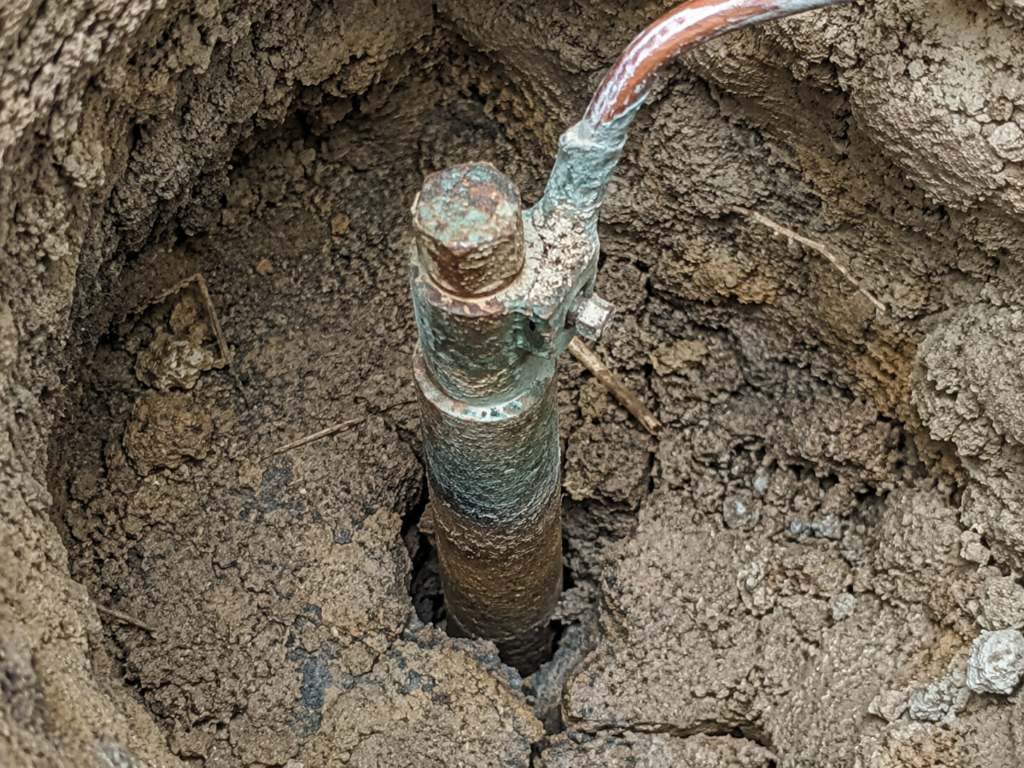
Traditional mild steel or GI pipes undergo continuous electrochemical oxidation in moist soil. Rust acts as a high-resistance barrier and leads to total physical failure of the electrode over time.

corroded copper and steel electrical grounding rod

Figure 1: Substation earthing connection vulnerable to soil corrosion and dry air gaps.

Part 2: How Chemical Earthing Solves Earthing Failures

1. Dual-Tube and Copper-Bonded Steel Electrodes

Chemical earthing utilizes copper-bonded steel rods (molecularly bonded with 250+ microns of electrolytic copper) or heavy-duty Pipe-in-Pipe dual electrodes that withstand mechanical stress and resist soil corrosion.

2. Formulated Earth Enhancement Compounds

Instead of salt and charcoal, chemical pits are encased in Earth Enhancement Compounds (Bentonite or Carbon-based) that absorb moisture up to 13 times their dry volume and maintain low resistivity permanently.

Parameter Traditional Salt & Charcoal Chemical Earth Compound
Moisture Retention Dries out quickly; needs frequent watering Retains moisture internally long-term
Leaching Behavior Washes away with rainwater Non-leaching & permanent
Lifespan 2 to 3 years 15 to 25+ years (Maintenance-Free)

3. Elimination of Air Gaps

The compound sets into a conductive slurry around the electrode, creating a continuous 360-degree bond with the surrounding earth wall, completely eliminating seasonal resistance spikes.

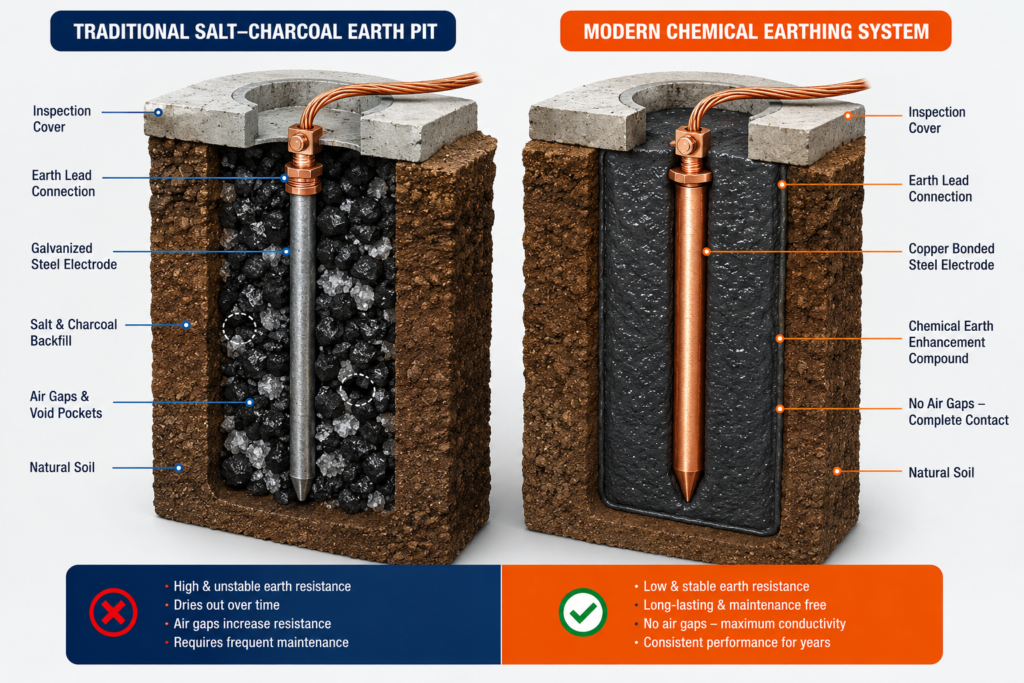
side-by-side technical comparison diagram between a traditional salt-charcoal earth pit (left) and a modern chemical earthing system (right)

Figure 2: Visual comparison showing traditional salt-charcoal earthing vs. seamless chemical earthing with backfill compound.

Part 3: Installation & Maintenance Best Practices

  1. Borehole Preparation: Drill a vertical pit of 100mm–200mm diameter and 2m–3m depth based on soil resistivity.
  2. Electrode Placement: Position the chemical earthing electrode centrally inside the pit.
  3. Slurry Backfill: Mix the conductive compound with water and pour it evenly around the rod.
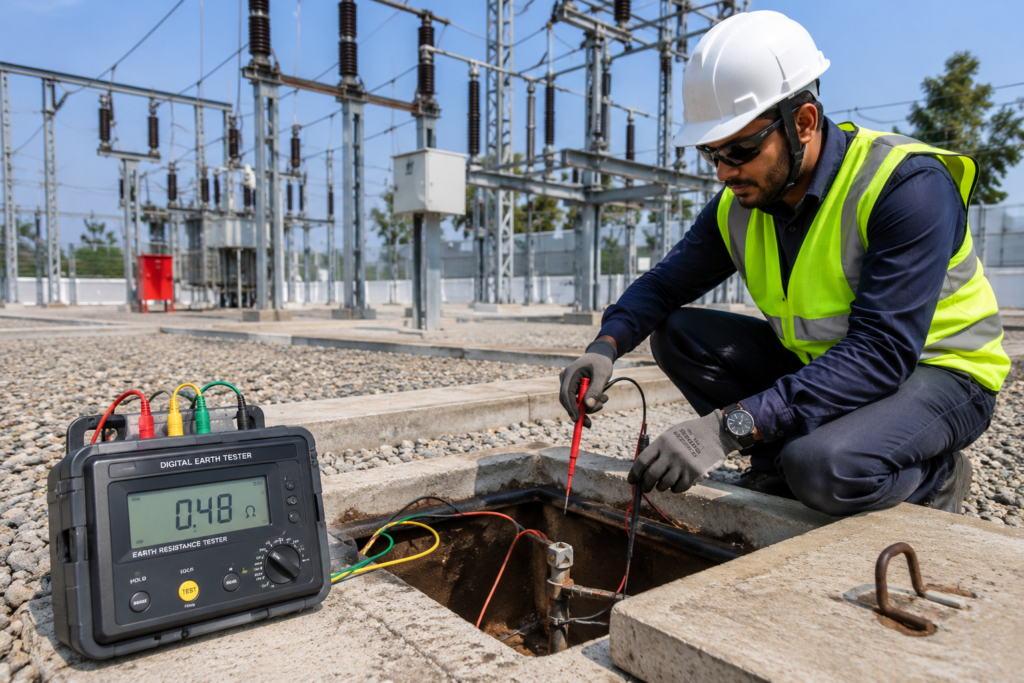
  4. Annual Audits: Perform Fall-of-Potential testing once a year during the dry season to verify sub-ohm performance.
safety helmet and high-visibility vest conducting a digital earth resistance meter test

Figure 3: On-site testing and installation of a maintenance-free chemical earth pit in a high-voltage substation grid.

Conclusion

Ensuring ground grid stability and low resistance is non-negotiable for modern power infrastructure. While traditional salt-and-charcoal earthing methods lead to frequent resistance spikes, severe corrosion, and high maintenance overhead, switching to engineered chemical earthing provides a long-term, reliable defense. By leveraging copper-bonded electrodes and high-capacity earth enhancement compounds, substations can eliminate seasonal safety risks and guarantee sub-ohm performance for decades. For power utilities, EPC contractors, and industrial facilities, investing in advanced chemical earthing technology with Relco Electricals is the most effective step toward zero-downtime operations and absolute site safety.

About the Author:

Meghna Baid

Meghna Baid is a marketing professional with 7 years of experience, specializing in the electrical industry. She excels in brand building, strategic messaging, and high-impact campaigns, blending creativity with data-driven precision. With a sharp understanding of B2B and technical markets, she crafts compelling narratives that drive results and build strong industry connections.

Reach out to her at marketing@relcoelectrical.com

Leave a Reply

Your email address will not be published. Required fields are marked *