What Makes Electrical Equipment Suitable for Africa’s Harsh Environments?

0
Electrical equipment for African climates featuring rugged high-voltage hardware and power grid solutions by Relco
What Makes Electrical Equipment Suitable for Africa’s Harsh Environments? | Relco Electricals

Introduction: Powering Africa’s Growth Against Nature’s Toughest Tests

Africa’s remarkable economic expansion—stretching from rapidly modernizing metropolitan centers to massive rural electrification initiatives—has driven an unprecedented, continent-wide demand for stable, high-performance power infrastructure. However, designing, building, and operating a reliable power grid across the diverse landscapes of the African continent means going head-to-head with some of the most demanding environmental and geographical challenges on the planet.

From intense, unbroken UV radiation and extreme daily thermal swings to torrential seasonal monsoons, severe coastal humidity, heavy industrial pollution, and some of the world's highest lightning strike densities, standard electrical hardware degrades at an accelerated rate. For utility operators, EPC contractors, and procurement managers sourcing electrical equipment for the African climate, relying on conventional, off-the-shelf components often results in premature asset failure, recurring grid blackouts, and unsustainable long-term maintenance overhead.

So, what precise engineering, material science, and metallurgical features actually make high-voltage infrastructure survive and thrive under these extreme operating environments? Let’s examine the comprehensive technical requirements needed to build a resilient, future-proof power grid across Sub-Saharan and regional African grids.

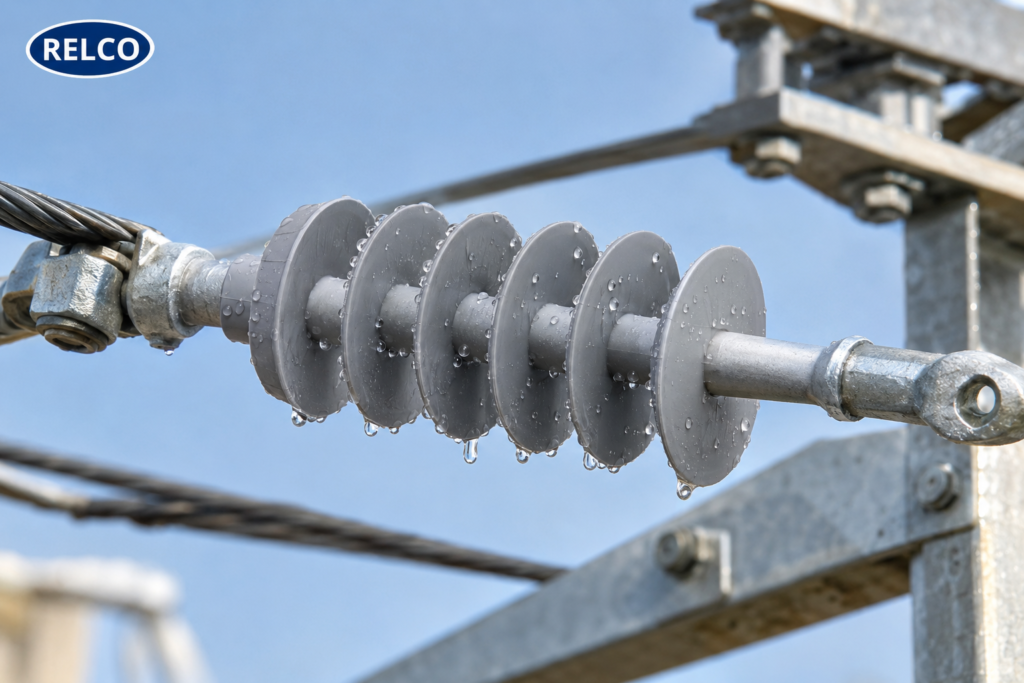
Composite polymeric high-voltage electrical insulator showing water-repellent hydrophobicity on a utility crossarm
A technical close-up view of a modern composite polymeric insulator installed on a power line crossarm. The material's natural hydrophobicity causes moisture to bead up and roll off instantly, stopping leakage current and surface tracking during heavy tropical rainfall.

1. Material Resilience: Why Composite Polymers Far Outperform Traditional Porcelain

In regions characterized by blistering heat, intense solar radiation, airborne dust accumulation, and heavy mechanical stress, traditional porcelain hardware is highly susceptible to micro-cracking, sudden shattering under thermal shock, and dangerous surface pollution flashovers.

The Mechanics of Polymeric Superiority

Modern high-voltage networks rely heavily on advanced Polymeric Insulators (such as 11kV and 33kV polymer pin, post, and suspension disc insulators). Premium polymeric materials feature a natural, enduring hydrophobicity—meaning atmospheric moisture and rain bead up and roll off rather than forming a continuous, conductive water film across the insulator body. This effectively prevents leakage current, surface tracking, and flashovers during heavy tropical downpours and humid morning dew cycles.

Lightweight Logistics and Transport Durability

Unlike heavy, fragile porcelain, composite polymer insulators are exceptionally lightweight and highly resistant to transportation and handling shocks over rough, unpaved terrain. This drastically cuts down transit breakages and makes it significantly easier for field technicians to transport and install hardware safely in remote, hard-to-reach rural electrification sites without needing specialized heavy lifting equipment.

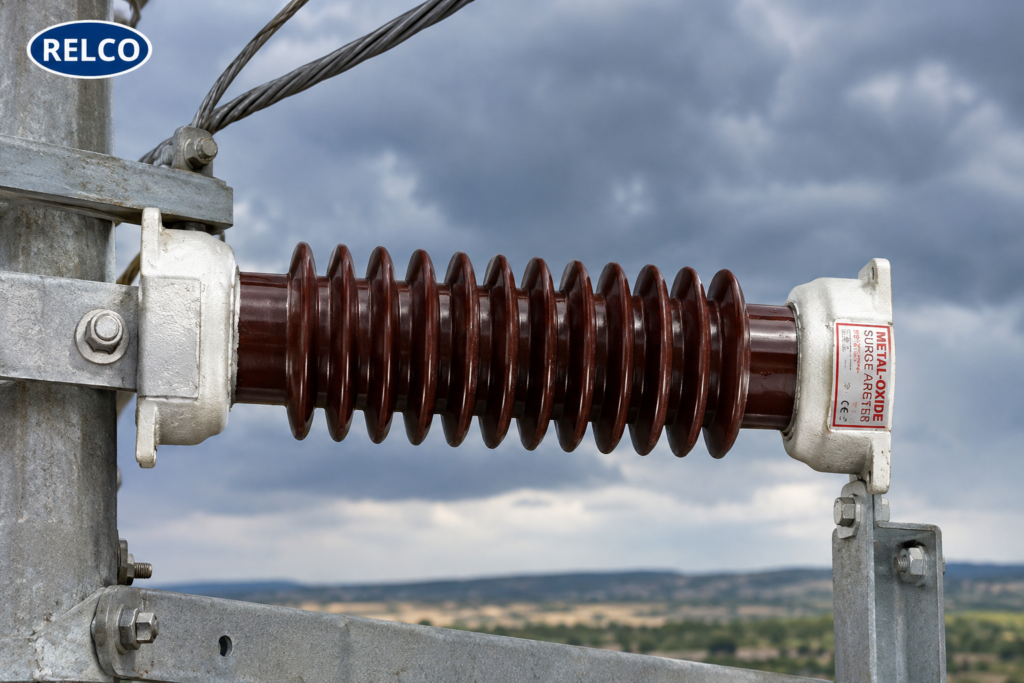
Heavy-duty metal-oxide surge arrester installed on a high-voltage electrical distribution pole for lightning protection
A close-up technical shot of a non-linear metal-oxide surge arrester mounted on a power pole. Engineered for high-lightning-density zones, this device safely routes thousands of amperes of transient overvoltage straight into the earth, preventing costly damage and sudden grid blackouts.

2. Advanced Surge Protection for High-Lightning Strike Zones

Many regions across Africa experience some of the densest and most aggressive lightning activity globally. A single unprotected surge or transient overvoltage can instantly fry multi-million-dollar step-down transformers, damage sensitive distribution assets, and paralyze entire regional power networks for days.

High-Energy Dissipation

Metal-Oxide Surge Arresters safely route thousands of amperes of lightning transient energy directly into the ground without internal component degradation.

Thermal Stability

Engineered to handle intense tropical ambient heat alongside severe surge-induced thermal loads without cracking or structural failure.

The Role of Heavy-Duty Metal-Oxide Arresters

Reliable rugged power distribution equipment in Africa must incorporate non-linear Metal-Oxide Surge Arresters (such as heavy-duty 30kV 10kA polymer arresters) at strategic sub-station junctions, overhead line taps, and transformer banks. These units instantly and safely divert transient overvoltages directly into the earth without aging, degrading, or losing their protective capability over multiple successive strikes.

Furthermore, because high lightning density goes hand-in-hand with challenging soil compositions, these systems must be coupled with advanced chemical earthing electrodes. This ensures low soil resistance paths are sustained even across dry, sandy, or rocky terrains where standard, shallow earth pits fail to dissipate high-energy charges effectively.

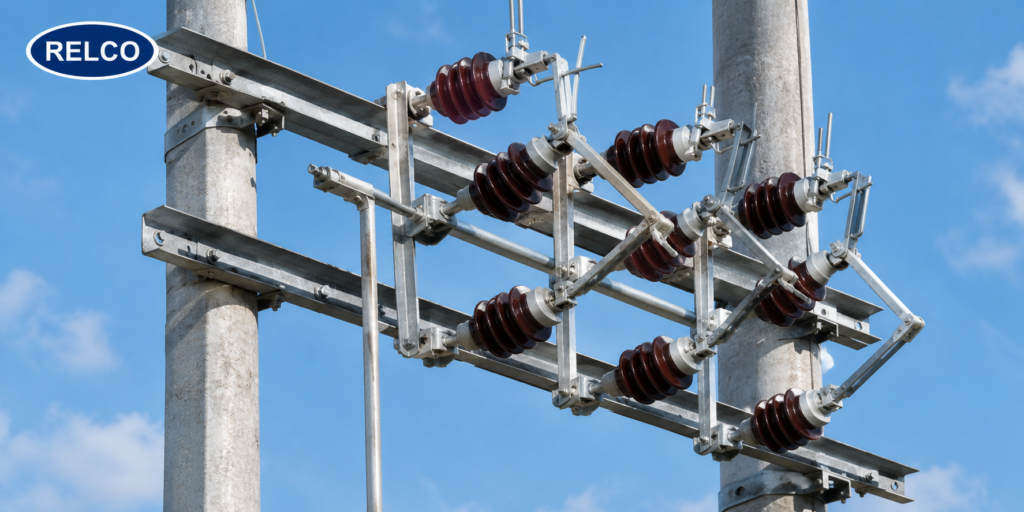
Hot-dip galvanized Gang Operated Air Break GOAB switch installed on outdoor utility poles
A clear field photo of an overhead high-voltage GOAB switch and line isolator assembly. Featuring heavy-duty non-corrosive alloy components and UV-resistant insulation, this hardware ensures seamless mechanical operation and reliable circuit isolation without seizing up under extreme daily thermal shifts and coastal humidity.

3. Corrosion-Resistant Switchgear and Weatherproof Hardware

Coastal belts, humid tropical rainforest zones, and areas with localized chemical or industrial air pollutants face severe atmospheric corrosion, which aggressively eats away at exposed metal parts, internal electrical contacts, and protective enclosures.

Preventing Mechanical Seizure and Rust-Lock

Essential overhead line infrastructure—such as Gang Operated Air Break (GOAB) Switches, Drop-Out (DO) Fuses, and line isolators deployed across Africa—requires hot-dip galvanized steel brackets, non-corrosive alloy components, and thick, UV-stabilized insulation. This defense-in-depth approach prevents rust-lock, oxidation, and mechanical seizure over years of service.

Additionally, high-voltage switchgear must seamlessly withstand extreme daily thermal shifts—surviving scorching daytime temperatures followed by rapid nighttime cooling without binding, sticking, or failing to trip cleanly during an emergency fault condition.

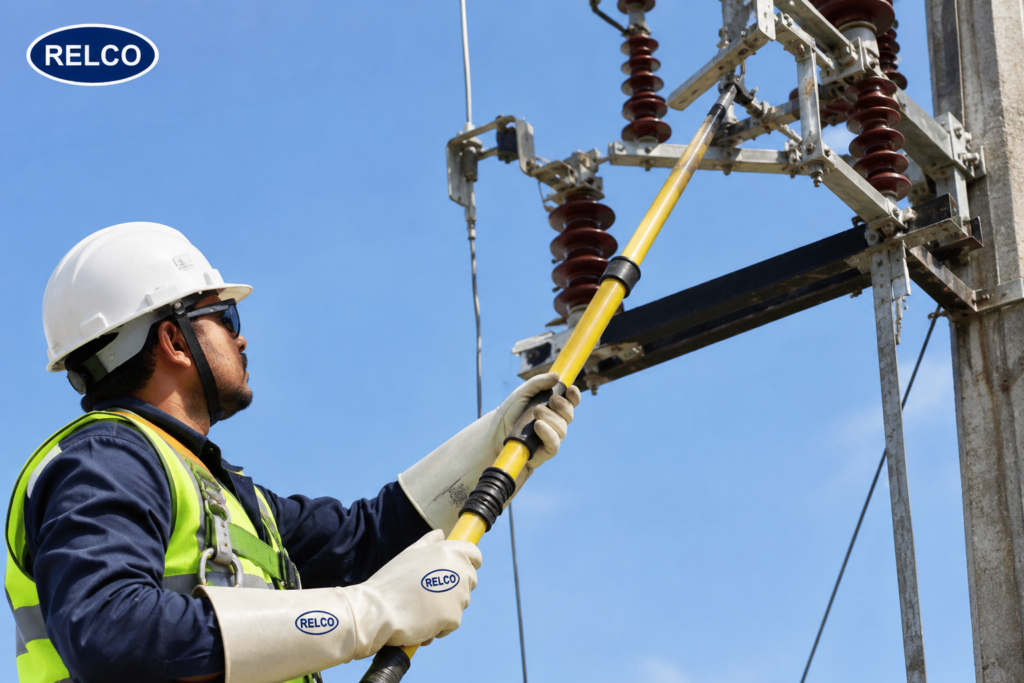
Electrical utility lineman working with insulated FRP hot stick and safety gear on distribution lines.
Utility technician utilizing high-strength Fiberglass Reinforced Plastic (FRP) hot sticks and protective safety gear for reliable maintenance under demanding field conditions.

4. Safety-First Maintenance Tools and Field Gear for Linemen

Harsh environments don't just test grid hardware; they test the endurance, physical strength, and safety of maintenance crews. Field technicians working in remote, high-temperature locations require specialized, ruggedized gear engineered for absolute reliability under duress.

Deploying high-strength Fiberglass Reinforced Plastic (FRP) discharge rods, telescopic hot sticks, and weather-tested non-contact voltage detectors ensures that linemen can safely isolate, discharge, and service transmission lines even when working under adverse weather conditions, high humidity, or emergency night-repair scenarios.

Engineering Note: Designing for the Continent

Building a truly resilient power grid starts with choosing components engineered specifically for extreme climates rather than attempting to adapt temperate-zone hardware to tropical and arid conditions.

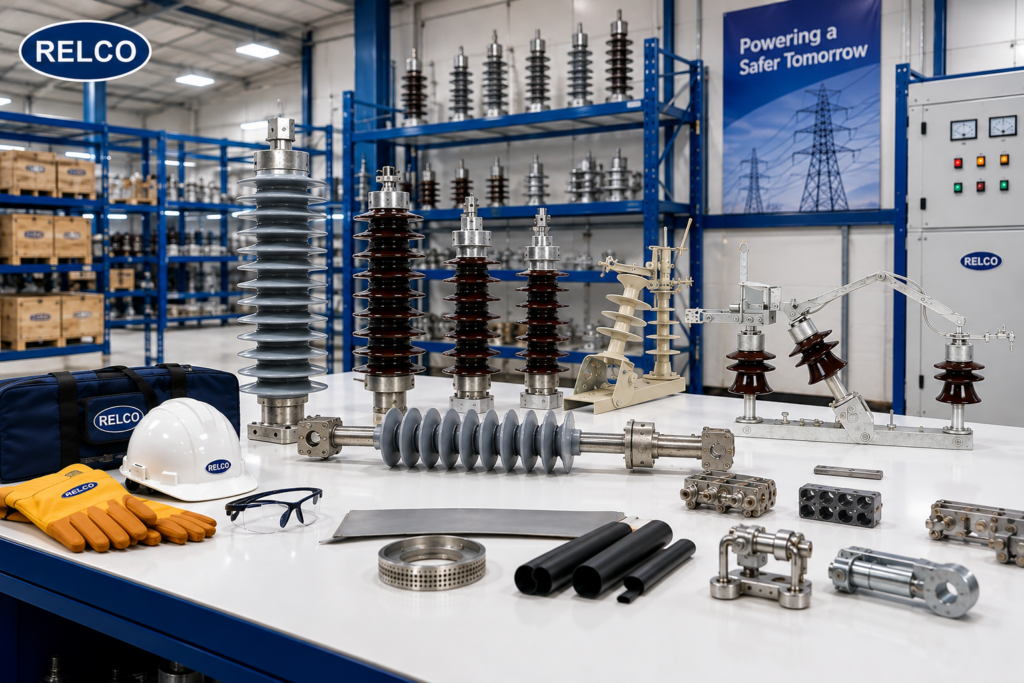
Export-grade high-voltage electrical power distribution equipment and accessories neatly organized in a facility
Relco Electricals' comprehensive export-grade high-voltage portfolio—featuring IEC-compliant polymeric insulators, heavy-duty metal-oxide surge arresters, GOAB switches, and precision cable accessories—engineered to withstand severe climatic stress and ensure long-term grid reliability across international utility projects.

Sourcing Reliable Power Equipment: Why African Utilities Trust Relco Electricals

Building a resilient, long-lasting power grid requires a manufacturing partner who understands that engineering compromise is never an option. As a trusted partner for international infrastructure and utility projects, Relco Electricals delivers an export-grade high-voltage portfolio—including IEC-compliant Polymeric Insulators, Heavy-Duty Surge Arresters, GOAB Switches, and complete Cable Accessories—meticulously engineered to conquer severe climatic stress.

By combining strict quality control, international compliance, and robust product engineering, Relco empowers utilities, project developers, and electrical contractors across Africa to minimize network downtime, lower lifecycle costs, and secure the continent's electrified future.

Ready to Strengthen Your Power Infrastructure?

Explore our comprehensive range of weatherproof electrical hardware for utilities, designed specifically for demanding operating environments.

Contact Relco Electricals Today

About the Author:

Meghna Baid

Meghna Baid is a marketing professional with 7 years of experience, specializing in the electrical industry. She excels in brand building, strategic messaging, and high-impact campaigns, blending creativity with data-driven precision. With a sharp understanding of B2B and technical markets, she crafts compelling narratives that drive results and build strong industry connections.

Reach out to her at marketing@relcoelectrical.com

Leave a Reply

Your email address will not be published. Required fields are marked *